
Executive Sprinter
12–14 passengers
Leather seating, USB charging and easy boarding for last-mile BART connectors and pilot routes.
Get quote for this vehicle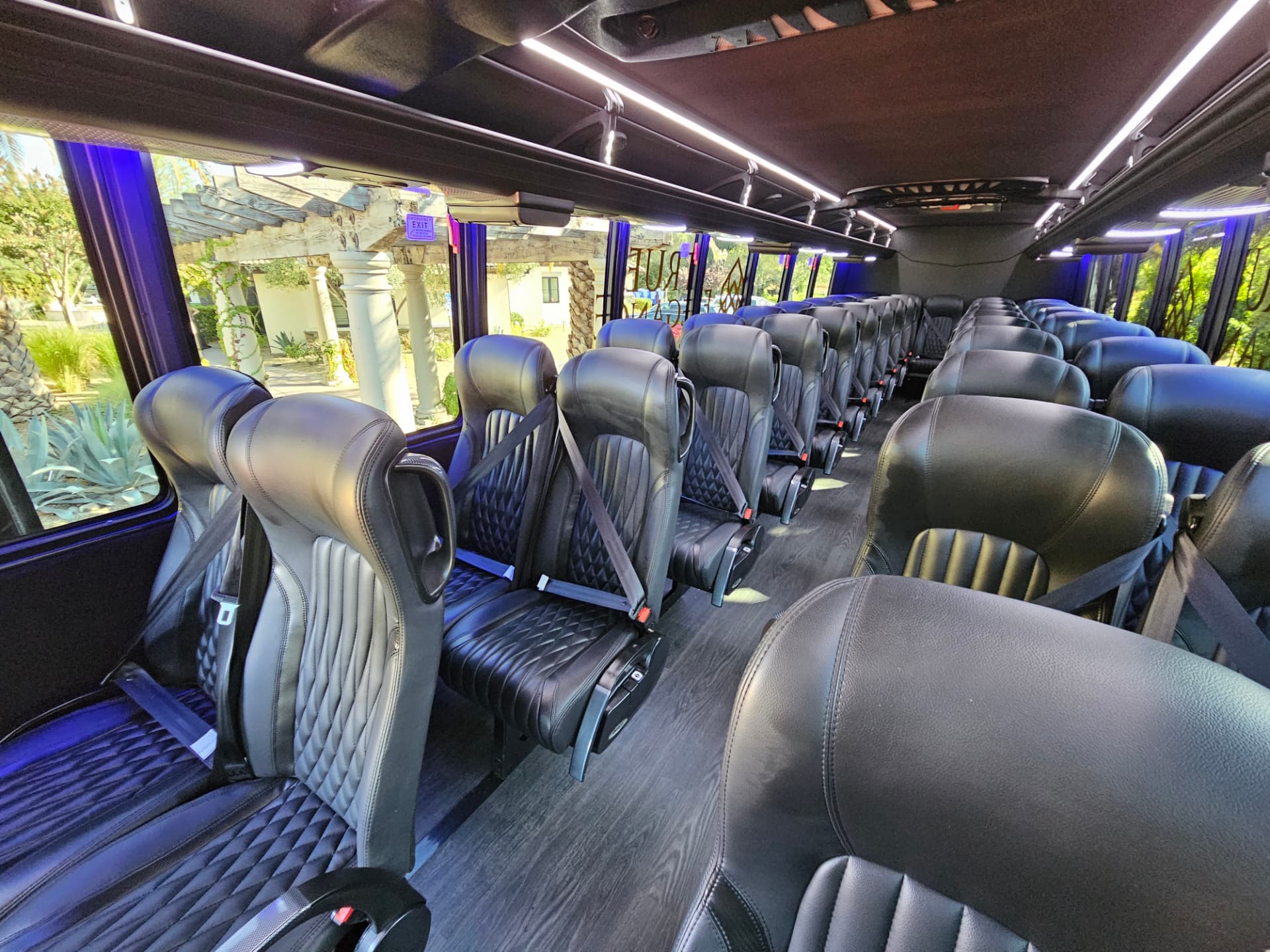
Technology that moves people
Employee shuttle programs run by a Pleasanton-based operator with live GPS tracking, digital QR boarding passes, real-time dispatch, shared seat allocation and audit-ready reporting.
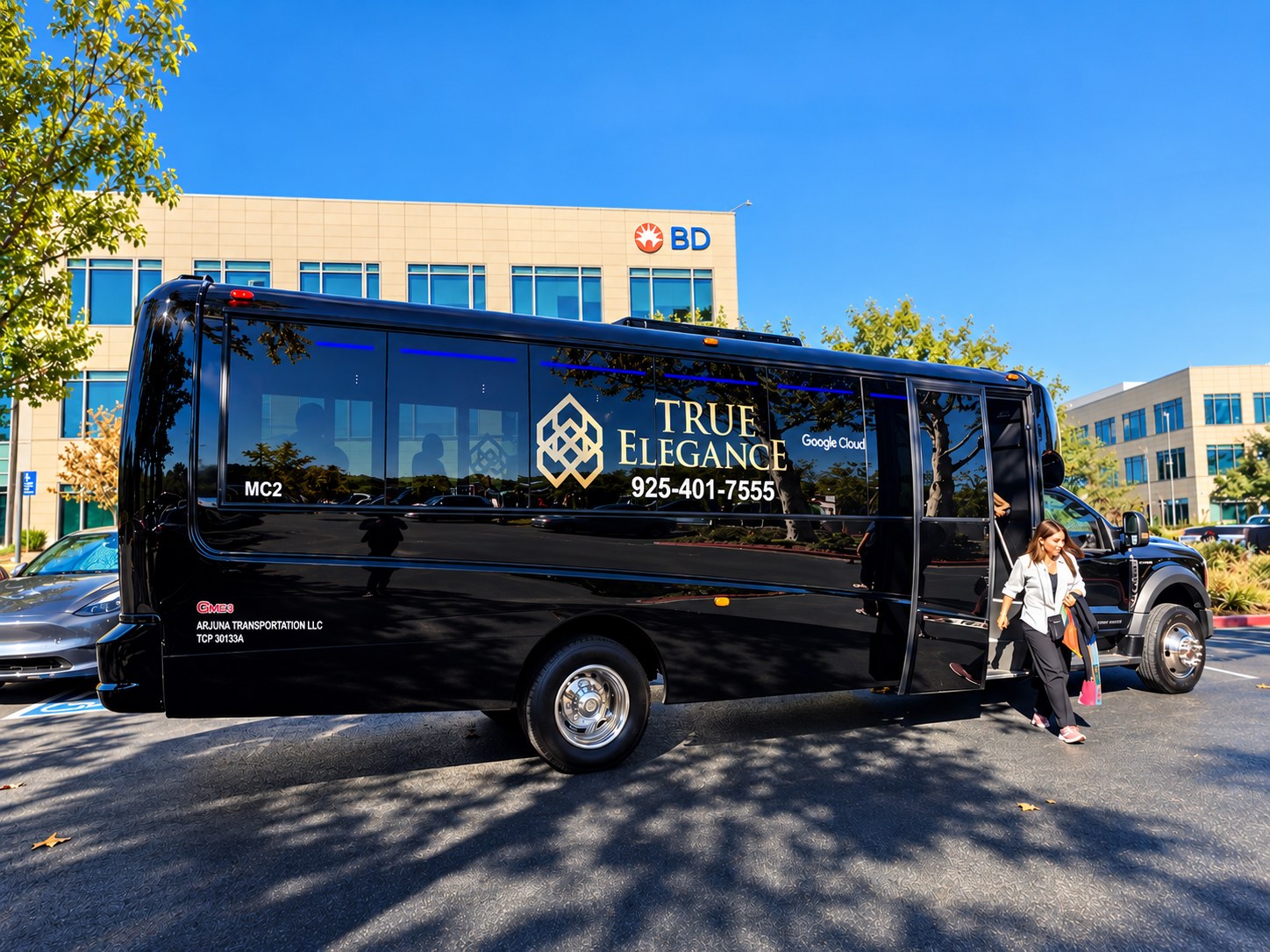
A commuter shuttle only earns ridership when employees trust it: a seat is reserved, the vehicle's position is visible, boarding takes seconds, and the program's numbers hold up in front of finance. Everything below is technology used in the day-to-day operation of our routes — the same tools our dispatch, chauffeurs and operations team rely on for every run across Pleasanton, Livermore, Dublin, San Ramon and the wider Bay Area.
Programs run from 12-passenger executive Sprinters up to 56-passenger coaches, with stops built around where your people actually live: Dublin/Pleasanton and West Dublin BART, ACE stations, Park & Ride lots, neighborhood pickups and campus drop-offs. All service is operated under CPUC authority (TCP 30133A) with full commercial insurance.
The platform
From digital boarding passes to live fleet maps, every screen is built for speed, clarity and multi-employer operations.


Next step
Whether you already have an RFP in hand or just a list of home ZIP codes and shift times, pick whichever route is easiest for your team.
Send routes, headcount and shift times and we return per-route pricing, vehicle class, service levels and reporting samples in writing.
Request a proposalEmail your RFP, bid packet or scope of work to reservations@trueelegancesfbay.com and we will respond with completed forms, insurance certificates and CPUC authority (TCP 30133A).
Email your RFPBook a short call with our operations team to sanity-check stops, timing and BART or ACE connections before anyone writes a spec.
Call 925-401-7555Prefer to read first? Download the one-page commuter shuttle capabilities sheet (PDF) — fleet sizes, technology, reporting and compliance on a single page you can forward to procurement.
Capabilities
Tracking, boarding, dispatch, safety, compliance and reporting — one connected operation rather than a stack of disconnected tools.
Hardware-fed GPS with route-adherence alerts, live ETAs and stop-by-stop arrival history. Dispatch, operations managers and authorized client contacts see vehicle positions throughout service hours.
Riders board with a QR code that refreshes every 30 seconds. Chauffeurs scan and confirm the full manifest in seconds — no paper lists — and boarding data feeds ridership reporting and invoicing.
Dispatch coordinates vehicle assignments, driver communication and schedule adherence on every active route, and can reroute, deploy a backup or adjust timing as I-580 and I-680 conditions change.
Chauffeurs stay in two-way contact with dispatch for the whole shift, so traffic events, schedule changes and rider issues get an immediate response without interrupting service.
Riders receive arrival notifications, schedule updates and service alerts — delivered by mobile notification, stop displays or your own internal communication tools.
Program managers and transportation coordinators view active routes, vehicle locations and service status in a web dashboard, without needing access to internal dispatch systems.
Onboard telematics capture speed, acceleration, braking, idle time and engine diagnostics. Hard-braking and speeding events are reviewed for driver coaching and corrective action.
Vehicles report diagnostic codes, mileage thresholds and service intervals to our shop, so maintenance is scheduled before it becomes an in-service breakdown on a commuter run.
Digital pre-trip and post-trip inspection reports, incident capture and one-tap escalation on every shift — CPUC and DOT compliance built into daily operations under TCP 30133A.
Trip-level detail rolls up into draft invoices, utilization reports, sustainability estimates and VMT-reduction metrics for finance, HR and corporate auditors.
Blend riders from multiple employers on one coach with per-company capacity rules, so every seat is used and every dollar is accounted for on shared Tri-Valley routes.
Every query and report is scoped to the correct employer with row-level security, so companies sharing a route never see each other's riders, reports or invoices.
Every role
Each user sees exactly what they need — from the coordinator overseeing all routes to a rider checking the next arrival.
See schedules, watch the shuttle move in live traffic, present a QR boarding pass and get a real-time ETA to their stop.
Scan boarding passes, run DVIR checklists, mark stops complete, add walk-on riders and escalate incidents to dispatch.
Monitor live maps, reassign vehicles, handle delays and stay in contact with chauffeurs across every Tri-Valley route.
Invite and approve riders, manage sponsorship, track program utilization and download company-specific reports and invoices.
Manage routes, schedules, fleet assignments, company onboarding and configuration for the whole shuttle network.
One view of all companies, routes, fleet and billing — the accountability layer procurement and finance teams ask for.
Why it matters
Generic shuttle software assumes one company per bus and one report per client. Real commuter programs are multi-employer, multi-route and regulation-heavy.
Stops and timetables designed around BART, ACE, Wheels and Park & Ride connections — not generic point-to-point mapping.
Digital DVIR, driver hours tracking and audit trails are first-class features, not add-ons bolted onto off-the-shelf software.
Per-company capacity rules with isolated billing and ridership reporting for each employer on a shared coach.
Trip-level detail rolls into draft invoices, utilization metrics and sustainability estimates your finance team can audit.
Fleet
We size the vehicle to real ridership so you never pay for empty seats, and step up the class as the route fills.
12–14 passengers
Leather seating, USB charging and easy boarding for last-mile BART connectors and pilot routes.
Get quote for this vehicle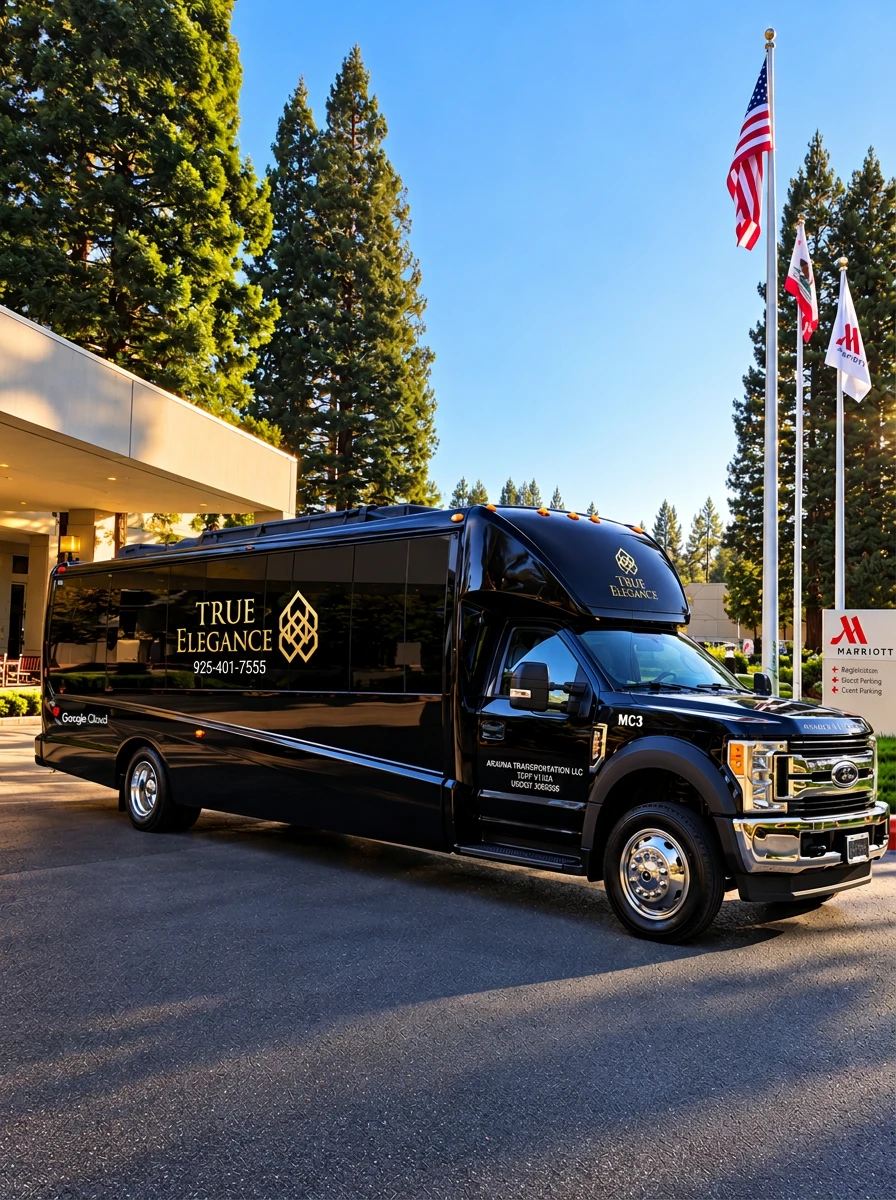
27–43 passengers
Forward-facing seating, work tables and luggage space for neighborhood and campus commuter runs.
Get quote for this vehicle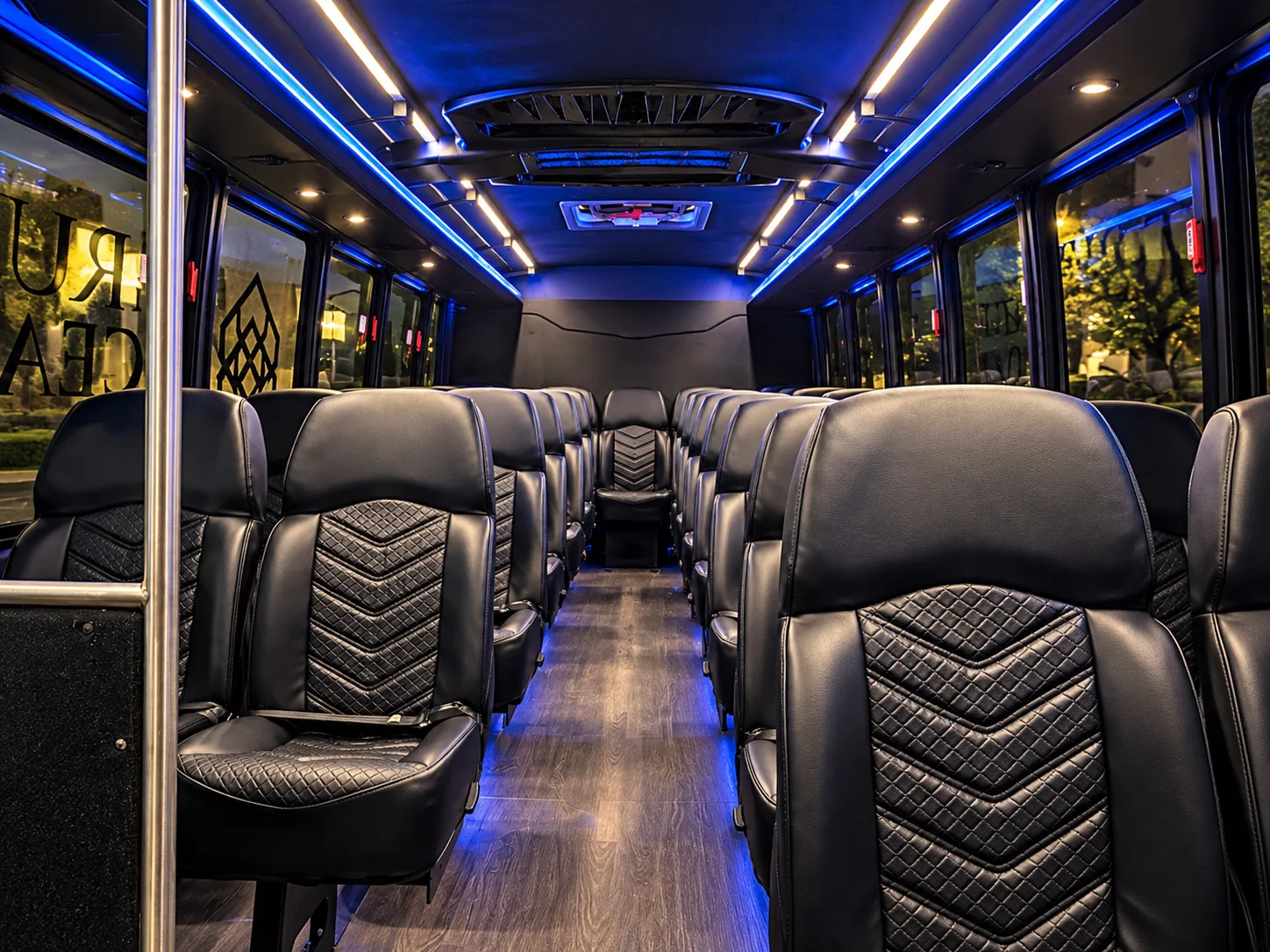
Up to 27 passengers
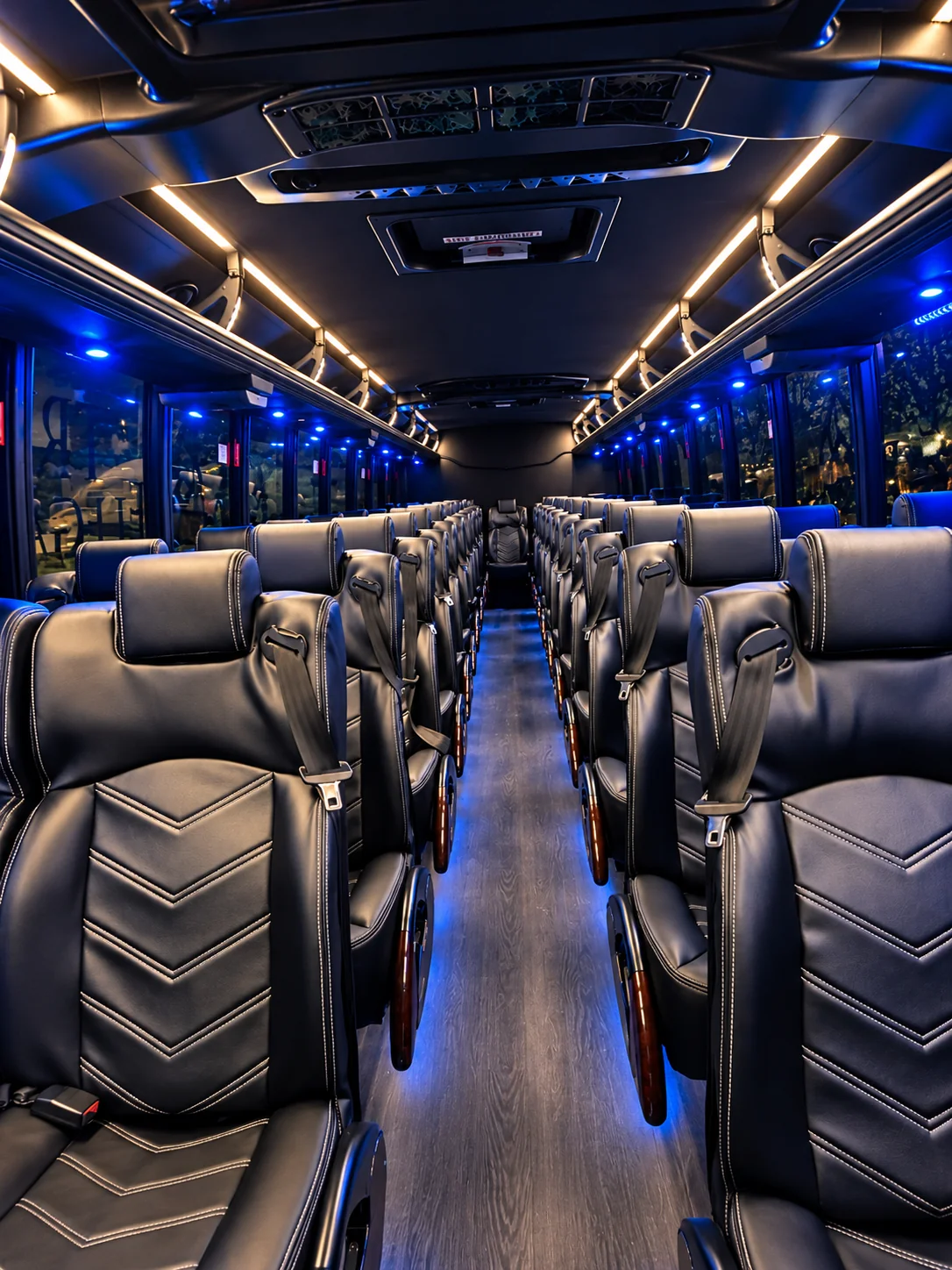
Quilted leather seats with seatbelts and blue LED lighting for daily employee commuter routes.
Get quote for this vehicle
Up to 56 passengers
Reclining seats and underfloor storage for long-haul regional commuter lines and Park & Ride express runs.
Get quote for this vehicleHow it works
We model stops and timetables around where your people live and when they need to be on site.
Per-route pricing, vehicle class, service levels, insurance certificates, CPUC authority and our Alameda County SLEB and LBCE-certified parent company, Arjuna Transportation LLC, for procurement.
Riders reserve seats and board with QR passes; you watch ridership, on-time performance and utilization in reports.
Every program starts with route design. We use ridership data, traffic patterns and transit timetables to build routes that keep door-to-desk time realistic for employees traveling from Livermore, Dublin, Pleasanton, San Ramon, Danville and Tracy to Tri-Valley and cross-bay worksites. Routes are refined on actual performance data — stop locations, departure times and vehicle assignments adjust as the program matures.
Commuter programs live or die on connections. We coordinate timed transfers with BART at Dublin/Pleasanton and West Dublin, ACE at Pleasanton and Livermore, Wheels local service, County Connection into Contra Costa and ferry and Caltrain connections for cross-bay riders. When transit runs late, dispatch is alerted and can hold or re-time a run to keep the connection intact.
Program managers need data to justify the investment. We track boardings by stop, route, company and time period, and report on-time performance, cost-per-rider trends, vehicle utilization, VMT-reduction estimates for sustainability disclosures and route-level comparisons — the evidence leadership and procurement teams ask for at renewal.
Every California commuter shuttle operation answers to CPUC and DOT rules. Digital DVIRs, driver hours tracking, inspection records and incident reporting are captured electronically, and telematics flag speeding, hard braking and idle behavior for immediate coaching. Backup vehicles are staged locally in Pleasanton rather than across a bridge.
ADA shuttle options are part of the program and riders can request an accommodation when reserving. We operate lift-equipped, wheelchair-accessible vehicles with securement stations. If accessibility is a requirement in your RFP, flag it and we will confirm vehicle specifications and boarding procedures in writing.
Ready to see it? Call 925-401-7555, or request a commuter shuttle proposal with your routes and headcount.
Sample reporting
This is the shape of the reporting a Tri-Valley program owner receives each month. Figures below are a sample layout from a demonstration route, not a performance claim — your numbers come from your own boardings.
Boardings
1,842
AM + PM runs, 21 service days
On-time performance
97.4%
Within 5 minutes of scheduled stop
Seat utilization
78%
Average seats filled per run
Cost per boarding
$—
Calculated from your contracted rate
| Stop | Scheduled | Boardings | Avg. variance | Seats filled |
|---|---|---|---|---|
| Dublin/Pleasanton BART | 7:05 AM | 412 | +1 min | 92% |
| West Dublin BART | 7:18 AM | 268 | +2 min | 84% |
| Hacienda / Owens Dr | 7:34 AM | 356 | 0 min | 76% |
| Stoneridge Mall Rd | 7:41 AM | 298 | +3 min | 71% |
| Livermore ACE transfer | 7:58 AM | 324 | +2 min | 68% |
| San Ramon Bishop Ranch | 8:16 AM | 184 | +4 min | 61% |
Trip-level detail rolled into a draft invoice per employer, with shared-seat allocation broken out by company.
Estimated vehicle miles removed and single-occupancy trips replaced, formatted for internal ESG disclosures.
Stop-by-stop arrival history, DVIR completion, telematics exceptions and any service incidents for the period.
A commuter shuttle is scheduled, employer-sponsored transportation between where your people live — or a BART station, Park & Ride lot or neighborhood stop — and where they work. True Elegance provides the vehicles, chauffeurs, dispatch and reporting; riders reserve a seat and board with a QR pass.
Riders reserve seat-level through the rider portal, including standby waitlists and ADA accommodation requests. Company administrators can also book on an employee's behalf and manage the passenger roster.
Yes. Hardware-fed GPS with route-adherence alerts shows the vehicle's position and a live ETA to the next stop, so nobody stands at a curb guessing. Dispatch sees the same data with stop-by-stop arrival history.
Each rider carries a QR boarding pass that rotates every 30 seconds. The chauffeur scans passes to validate the full manifest in seconds, and boarding data flows straight into ridership reporting and invoicing.
Yes. Shared seat allocation blends riders from multiple employers on one coach with per-company capacity rules, while row-level data isolation keeps each company's riders, reports and invoices separate.
Chauffeurs complete digital pre-trip and post-trip Driver Vehicle Inspection Reports on every run, with incident capture and one-tap dispatch escalation. Driver hours, inspection records and audit trails are retained under our CPUC authority (TCP 30133A).
From 12-passenger executive Sprinters to 56-passenger coaches, with 27- and 43-passenger shuttles in between. We size the vehicle to actual ridership and step up the class as the route fills.
Yes. We operate lift-equipped, wheelchair-accessible vehicles with securement stations, and riders can flag an accommodation when they reserve a seat so the right vehicle is assigned to the run.
Trip-level detail rolls up into draft invoices, on-time performance, cost-per-rider trends, utilization rates and VMT-reduction estimates for sustainability reporting — downloadable for finance, HR and corporate auditors.
Call 925-401-7555 to talk through stops and ridership, or send your RFP and we will return a written proposal with pricing, service levels and reporting samples.
Book online
Send your trip details and we reply with the vehicle we would send and an all-in price including gratuity. Prefer to talk? Dispatch is staffed 24/7 at 925-401-7555.